
You may have heard someone make this claim, “I can make the Bible say anything I want!” “That interpretation is good for you, but it doesn’t work for me.” “No one can really know what the Bible’s authors’ intended.” Our postmodern world seeks to question everything, believe nothing, and live in uncertainty.
How do we respond?
We cannot make the Bible mean anything we want if we consider a few truths. First, the Bible can only mean what the original author under the guidance of the Holy Spirit intended it to mean. Secondly, the author had a specific audience in a specific place in mind. Thirdly, author’s write with purpose or intentionality. The author employed certain kinds of literature, writing styles, and employed specific kinds of literary forms.

To illustrate why context is important, consider the word ‘ball.’ What does it mean to say, “it was a ball?” Could it be that the context in which this statement is made will determine its intended meaning? If an baseball umpire says, “It’s a ball,” does that imply one meaning? Or if someone says, “We went to a formal dance last night, “It was a ball,” have another meaning? Or even if another person exclaims, “We went to a party yesterday, “and it was a ball.”

How do you know what each statement means? Context! Context casts light upon the intended meaning. So, we want to be able to assess the intended meaning of the text, then we must investigate a few key contexts with detail.
The next several weeks we will begin to explore ways to avoid “Making the Bible Say Anything We Want.”

To Keep from Making the Text Say Anything We Want –
STEP ONE – To Keep from Making the Text Say Anything We Want – We need to research the author’s background by exploring several key areas, such as,
- Worldview: values, mindset, or outlook of the writer, recipients or others mentioned.
- Societal structures: marriage and family patterns, roles of men and women, or racial status.
- Physical features: climate, weather, structures, implements, or ease and means of transportation.
- Economic structures: means of making a living, issues of wealth and poverty, slavery, or economic mobility.
- Political climate: structures, or loyalties, including actual personnel
- Behavior patterns: dress or customs.
- Religious practices: power centers, convictions, rituals, or affiliations.
STEP TWO – To Keep from Making the Text Say Anything We Want – As much as possible – reconstruct the historical setting and cultural features of the text.
- Explore the situation of the author with a direct focus on why the author wrote the passage.
- Discover the situation of the people involved in the event(s) recorded in the passage that helps to explain why the author penned his material to them.
- Study the relationship between the author and the recipients of the book or involved in the passage.
- Investigate the cultural or historical features recorded in the passage.

STEP THREE – To Keep from Making the Text Say Anything We Want -we need to know what tools to discover and utilize.
Some suggestions would be:

A. The Bible Itself – there are many historical-cultural hints directly in the text. There may be other books that the author wrote to provide additional context. Or perhaps the audience is the same and this provides more evidence to explore.
B. Specialized Materials – today a plethora of materials are available to assist the interpreter with this context of the author.
Here are a few materials to consider:
Matthew, V. H. Manners and Customs in the Bible: Revised Edition. Peabody, MA: Hendrikson, 1991.
This presents a reliable overview of daily life for both the Old and New Testaments.
Thompson, J. A. A Handbook of Life in Bible Times. Downer’s Grove: InterVarsity Press, 186.
Seek this book for another handy overview of life in both testaments.
Blaiklock. E. M. and Harrison, R. K. eds. The New International Dictionary of Biblical Archaeology, Grand Rapids: Zondervan.
A dated work written by conservative scholars and organized by subject. This allows the laymen the experience the archaeological discoveries shedding light on the text.
Wiseman, D. Peoples of the Old Testament Times, Oxford: Clarendon Press, 1973.
This work offers insights in the nations surrounding Israel.
King, P. J. and Stager, L. E. Life in Biblical Israel. Library of Ancient Israel, Louisville: Westminster John Knox, 2001.
Some claim this is the best color photographs and pictures to illustrate how life was lived in ancient times.
Pritchard, J. B. ed., The Ancient Near East in Pictures, 2d ed. Princeton: Princeton University Press, 1969.
This presents photographs along with explanations of life in the ancient Near East and gives an excellent view into the ancient world of the Bible.
Aharoni, Y. The Land of the Bible. Rev ed. Philadelphia: Westminster, 1979.
A well known Israeli archaeologist presents extensive information on the geography of ancient Israel.
Sasson, J. M. ed. Civilization of the Ancient Near East, 4 vols. New York: Scribner, 1995.
Considered as the standard, in-depth book on the major cultural groups of the ancent world.
Esler, P. F. The First Christians in their Social World. London/New York: Routledge, 1994.
A very readable introduction to the sociological background of the New Testament.
Malina, B. J. The New Testament World: Insights from Cultural Anthropology. 3d rev and expanded ed. Louisville: Westminster John Knox. 2001.
Extremely insightful, this book provides windows into understanding certain values, practices, and perspectives of people in the first century world.
Meeks. W. The First Urban Christians: The Social World of the Apostle Paul. New Haven: Yale University Press, 1983.
This was a ground-breaking work using the sociological approach to understand the biblical world of Paul with its associations and institutions.
Many others could be mentioned, but these will give the reader a place to begin exploring this fascinating world of the Bible. A helpful resource which I used for this blog is William Klein’s An Introduction to Biblical Interpretation.
Respond to this question, please:
What other statements do you hear people make related to the idea that I can make the Bible say anything I want it to mean? Or have you discovered other books / resources to help with the context of a passage?
Please feel free to leave a reply below:

 century. Americans were expected to learn the four core subjects: reading, writing, arithmetic, and geography.
 traveled to the lands of the Bible. Therefore Bible students are predisposed to imposing their own geographical frameworks upon the biblical story. In addition, some geographical places may have changed due to natural disasters: earth quakes and floods, as well as man-made changes, such as war, agricultural endeavors, and construction projects.
 example, the student may be able to picture himself passing through the Valley of Elah between Succoth and Azekah along with young David. Or maybe the student can understand something of what David felt as he hid in the caves of Ein Gedi as King Saul was seeking to kill him. Maybe the student can imagine what it would be like to accompany Elijah when he escapes from Jezebel after killing the prophets of Baal? Perhaps the student can envision walking on the water with Peter or being associated with Paul as he makes his second missionary journey into Europe? The student should have some idea about the Via Ignatia as Paul travels through Philippi and Thessalonica. Who would want to miss out on this journey?
 armies, like Israel’s army not engage the enemy for forty days even though the nine foot giant, Goliath, taunts them? God designed every hill, valley, river and mountain in Israel. God selected the actors and wrote the script. So, does the geographical stage make any difference? Why do Gentiles settle in certain areas of the land of Israel and not in other areas? Why does the Hellenistic culture penetrate the high population areas and not the sparely populated regions of the western mountains?
 biblical student to picture the sudden storms which come upon this Sea. The student will know that the waves of the Sea of Galilee rage and dash upon the objects in its way. The student’s knowledge of the patterns of climatic features which cause the phenomena will stand a better chance of correctly dividing the Word of God. The geographical backgrounds allow the student to participate in the action or events that are recorded in the biblical text. The geographical context is often neglected in biblical interpretation and exegesis.
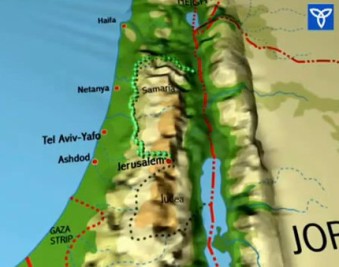 enemies and other times they were places of joint worship. Certain times kings would unite from one geographical section to fight against another group from the other side of the desert or the seas. This allows the student to be able to see how one group of people related to another or how one biblical person interacted with others: brothers, father and children, husbands and wives, kings with subjects and the list can go on. The land often caused some people to be friends with other peoples and enemies with still another group.
 Bible presents a message linked to geography.”

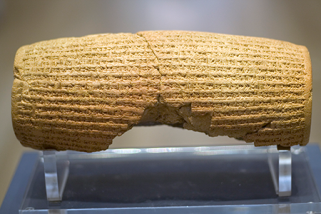 John wrote Revelation more than 2000 years ago. Books of the Old Testament found print even earlier. Thus, it behooves the interpreter to recognize the manner in which the world has changed during these gaps in time/history. The method of writing, recording and storing written materials has changed from stylus and clay or wax tablets, crude pens and papyrus or parchment writing materials to electronic storage systems like hard drives and the cloud. Imagine explaining those to a first century citizen.
 It may interest the reader that when one compares the ancient manuscripts available to study the New Testament Greek text, the New Testament manuscript evidence dwarfs that of other ancient literature. Today, we have more than 5600 Greek manuscripts. The earliest of these Greek manuscripts date from early 2nd century (around AD 130). Plato wrote between 427-347 BC. The earliest copy of Plato’s work is around AD 900. Only seven copies are available for study. A Roman historian, Suetonius lived AD 75-160. His earliest copy dates around AD 950 and there are a mere eight copies. This should substantiate that our New Testament is quite reliable. Factor in the additional 19,000 documents in Syriac, Latin, and Copies as well as Aramaic languages, the overwhelming evidence is the New Testament is most reliable.
 novel. God’s Word that is spiritual and requires the help of the Holy Spirit to understand God’s Word. The Bible is God-breathed or inspired and thus, the interpreter humbles himself/herself for God’s guidance. Remember God provided the Bible to transform us, not merely inspire us.



 Truth-Travelers