

The dialogue is unforgettable. Alice engages Humpty Dumpty in conversation. Humpty demands Alice tell him her name and her business.

“My name is Alice, but –“ she says.
Humpty spouts back, “It’s a stupid name! What does it mean?”
Alice queries back, “must a name mean something?”
“Of course it must,” Humpty Dumpty says. “My name means that shape I am – and a good handsome shape it is, too. With a name like yours, you might be any shape, almost.”
Later, more exchange occurs, “When I use a word, it means just what I choose it to mean – neither more nor less.”
The question is,” said Alice, “whether you can make words mean so many different things.”
“The question is,” said Humpty Dumpty, “which is to be master – that’s all.” Lewis Carroll (Charles L. Dodgson), Through the Looking-Glass,” chapter 6, p 205 (134), First published in 1872.
 When we approach God’s Word, we must know how to discover God’s original intention and what it means, not merely what it means to you.
WHAT ARE THE NECESSITIES WE NEED TO INTERPRET GOD’S WORD CORRECTLY?
-
Interpreters MUST be born again.*
Jesus said that no one can see the Kingdom of God without such a rebirth. “Truly, truly, I say to you, unless one is born again, he cannot see the kingdom of God.” (John 3:3).
The apostle Paul came from another direction with his words in 1 Corinthians 2:14-15, “But a natural man (one who has not had the new birth experience) does not accept the things of the Spirit of God; for they are foolishness t him, and he cannot understand them, because they are spiritually appraised. But he who is spiritual appraises all things, yet himself is appraised by no one.”
 This implies that the interpreter possesses a vital relationship with the God of the Bible. Does it make sense that if one denies the existence of God, the Bible cannot have meaning for such a person? How or why would someone as such want to read or study the Bible? Hebrews 11:6 indicates that it takes faith to please God since you must believe God exists and that He rewards those who seek Him.” Please understand that I am not saying that the unbeliever cannot grasp some of the facts and truths of the Bible – but such a person can never embrace the Bible as God’s full revelation of Himself. Nor do I believe that every sincere believer will always produce a ‘correct’ interpretation. But it is the role of the Holy Spirit to guide the believer into truth. Let’s determine to ask Him. See point 3 below.
2. Interpreters MUST hunger for God’s Word.
Jesus shared with his disciples, “Blessed are they which do hunger and thirst after righteousness; for they shall be filled.”
Who could forget what James says in James 4:8, “Draw nigh unto God; and he will draw neigh unto you.”
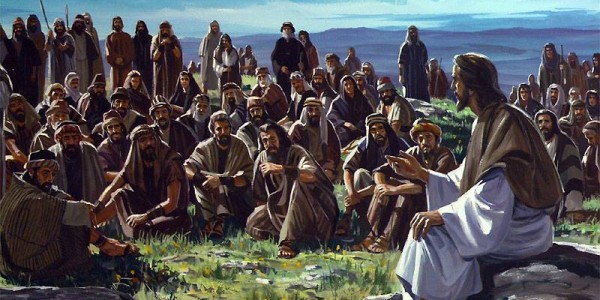
The word, blessed, comes from a Greek word, markarios. Its basic meaning hints that the blessed man is the one who is genuine, real – a man who refuses to play a role. When the man is tested, he is who and what he claims to be. Thus, those who are genuine believes will have a hunger to know, to understand, and apply God’s Word. What must the interpreter do? Draw near to God. Seek to know God better. This indicates one has a hunger for God and the things of God.
3. Interpreters MUST rely on the Holy Spirit
Jesus taught, “But when He, the Spirit of truth, comes, He will guide you into all the truth; for He will not speak on His own initiative, but whatever He hears, He will speak; and He will disclose to yo what is to come.”
Again, Paul instructs the church of Corinth, “For to us, God revealed them through the Spirit; for the Spirit searches all things, even the depths of God . . . which things we speak, not in words taught by human wisdom, but in those taught by the Spirit, combining spiritual thoughts with spiritual words.”
4. Interpreters MUST be diligent students.
As Paul knew his life was coming to an end, he instructed his young son in the ministry, Timothy, “Be diligent to present yourself approved of God as a workman who does not need to be ashamed, handling accurately the word of truth.” 2 Timothy 2:15.
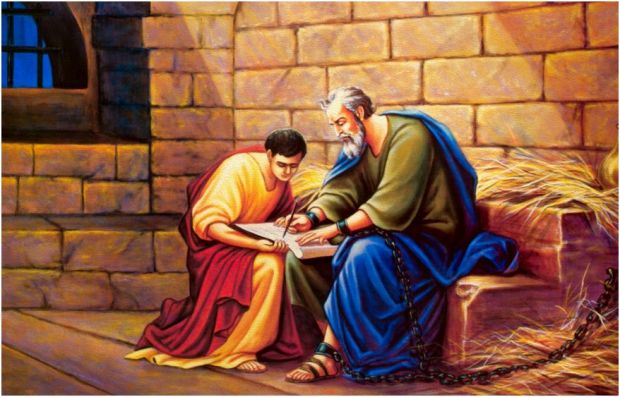
Understanding the Word of God is work. Some may not like that term, work. But, one must read, ponder, meditate, ask question about things the interpreter is not familiar, seek answers and stay at the task.
Do words have meaning? Are you a Humpty Dumpty? Well? Why or why not?
If this blog caused you to stop and think, please post a response. If it led you to re-evaluate your Bible study time and methods, let me know. If you have advice for someone who wants to begin to study God’s word, make those suggestions.
May the Lord bless you!
Dr Roy Lucas
*Earl P. McQuay, Keys to Interpreting the Bible. Nashville: Broadman Press, 1993 provided the stimulus for this blog.












 project at Tel Gezer. That year the soccer world cup series was showing on the Israeli television in our room and across the country of Israel.

 “6 If anyone is worried that he might not be acting honorably toward the virgin he is engaged to, and if his passions are too strong and he feels he ought to marry, he should do as he wants. He is not sinning. They should get married. 37 But the man who has settled the matter in his own mind, who is under no compulsion but has control over his own will, and who has made up his mind not to marry the virgin—this man also does the right thing. 38 So then, he who marries the virgin does right, but he who does not marry her does better.”
 Bible at Clear Creek Baptist Bible College in Pineville, Kentucky.

 Consider the following paragraph:
 of the sentence without context? What possibilities exist? The trunk of a tree? The trunk of a car? The trunk of an elephant? A type of luggage. Does the context make any difference if you are at an airport or at the zoo? – borrowed from William J. Klein et al,

 things about the Assyrian culture that led him to run away from God’s call. What do we know about his audience? What difference does it make to know anything about Ninevah? Where is it located? Why was Jonah’s story recorded? What lessons are we to learn?
 in the wall of ancient Jerusalem through which a camel would squeeze if its load was lifted. The camel had to crawl on its knees through the gate.
 create so much fascination that little focus is kept upon the actual truth. For example, when studying the Parable of the Prodigal Son, one can become enamored with the actions of the Prodigal and his brother, that the role of the father is neglected. We see that He desired relationship with both sons, regardless of the price to be paid.
 ago. The notion that a swan could be black seemed as impossible as a horseless carriage, a four minute mile, man in flight, a man standing on the moon, and flying cars.
 The “Black Swan Fallacy” postulates that if the speaker has not experienced a certain event or truth, then it cannot occur. Said in another way, just because a speaker has never experienced something in a way other than he has always experienced the event, then it means he can never have a different experience. Thus, since I have never observed a black swan, there cannot be black swans.”













 Truth-Travelers