“The
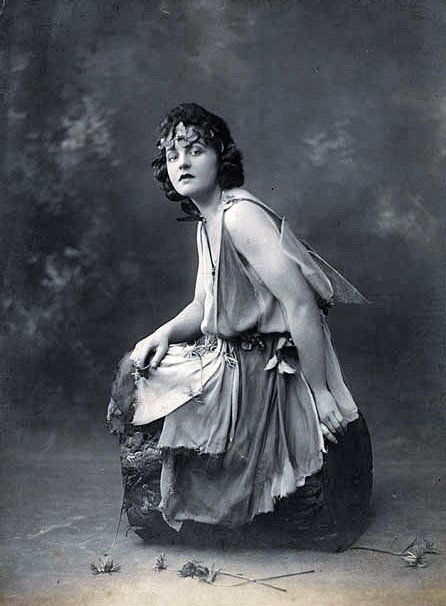
woman weeping at the 1964 premiere of Mary Poppins? None other than
the classic children’s book author P.L. Travers. But these were not tears of
joy or gratitude. Travers hated the movie.”[i]
Countless
original authors no doubt share P.L. Travers’ sentiments regarding artistic
license taken by later interpreters of their work. In many ways, as contemporary
Christian exegetes of the Scriptures, we are guilty of doing the same thing.
Only thirty years had passed between P.L. Travers’ publishing Mary Poppins and the aforementioned
world premier of the film by the same title with a reported devastating damage
done to her original intended meaning. So, how in the world can we as
preachers, teachers, and students of the Scriptures interpret the original
intended meaning of the text written over two millennia earlier?
Any
sincere interpreter of the Scriptures would surely agree with Fee and Stuart’s
classic hermeneutical principle, “A text cannot mean what it never meant.”[i] So, how can we determine
the author’s original intended meaning? Well, to answer that question we must
first understand the uniqueness of the biblical text. As you doubtless already
know we must take a close look at the genre of literature, the historical
context, the author, the original readers, and all of the other principles for
good interpretation. But the purpose of this blog today will be to answer the
question of the role of the third person of the Godhead in illumining the
biblical passage.
First,
we are dealing with text written by a man inspired by God to write for a
specific purpose (2 Timothy 3:16). Understanding the man is important. However,
we must remember that we are attempting to understand a text that is written in
a fashion that God the Holy Spirit inspired the human author to write.[ii] So, our doctrine of
inspiration plays a key role in our hermeneutical approach. It is imperative
then that we allow the Holy Spirit to illumine the text that He inspired for
our understanding.
Second,
as human beings we are incapable of understanding the things of God without the
illumination of the Holy Spirit. Whether you are a lay teacher with no formal
training in hermeneutics or if you are a formally trained biblical scholar or
somewhere in between—you cannot understand the God-breathed Scriptures without
the illumination of the Holy Spirit. Paul instructed believers in his first
Corinthian correspondence that the things of the Holy Spirit must be
spiritually discerned (1 Cor. 2:14).
Therefore,
we must approach the text as the divinely inspired Word of God that it is. Proper
hermeneutical principles will lead us to the proper interpretation of the text.
When we have determined that our interpretation of the text is correct, “the
Holy Spirit’s illumination guides us to use what we learned in the real world,
first in our own lives and then in the lives of those who hear us preach”.[iii]
Husband. Father. Granddad. Senior Pastor of FBC, Oneida, TN.
Former college administrator and Assistant Professor of Pastoral Ministries.
Randy has served as both vocational and bi-vocational pastor
to Tennessee and Kentucky churches since 1978. Randy has served on the Advisory
Council of Ministers for Carson-Newman College as well as the J. Harold Smith
Bible Institute and Pastor Training Center where he also served as an
instructor. He has been active in Disaster Relief where he also taught training
in evangelism. He served 12 years on the Executive Board of the Tennessee
Baptist Convention.
[i]
Gordan D. Fee and Douglas Stewart, How to
Read the Bible for All It’s Worth: A Guide to Understanding the Bible, 2nd
ed., (Grand Rapids: Zondervan Publishing House, 1981, 1993), 26.
[ii]
Wayne McDill, 12 Essential Skills for
Great Preaching, 2nd ed., (Nashville: B&H Academic, 2006),
68.
[iii]
Jerry Vines and Adam B. Dooley, Passion
in the Pulpit: How to Exegete the Emotion of Scripture, (Chicago: Moody
Publishers, 2018), 143.
Posted at 7:04 am by Dr. Roy Lucas, on February 25, 2019
Who is Hugh
Mortimor!
Sleep
escaped Hugh Mortimer this Sunday evening.
Hugh’s mind raced out of control. What was wrong with him? He mulled over the drastic drop in attendance
of his Sunday School class over the last several weeks. That bothered him. His normal excitement to
study the lesson has faded. Bible study was now work. “What is wrong with me?” he asked.
Even a
comfortable sleep position evaded Hugh this evening. Hugh tossed from his right
side to his left side. No position felt comfortable. Andrea, His wife of
nineteen years, plead with Hugh to stop his tossing. “I feel like I am on
Angela’s trampoline, bouncing up and down with each roll you make!” Hugh
promised to stop. It proved to be an empty promise. Hugh thought to himself, “Be
still! Go to sleep! You know you need your rest. You know you can’t change
anything tonight. Maybe I can count pink elephants and that will help?”
Rest eluded
Hugh. Hugh rehearsed how his class exploded when he replaced the former teacher
who many said droned on and on each week without any content. But now, Hugh found himself droning when he
taught. He felt like the teacher on Charlie Brown’s cartoon. “Blah, Blah,
Blah.” Finally, exhausted, Hugh fell asleep.
Awakening
earlier than usual Monday, Hugh told himself that he was going to start
preparing his lesson earlier this week. He pulled out the new quarterly and
found the place for this week’s lesson. His excitement grew when he saw this
quarter’s lessons would be out of Mark’s Gospel. Hugh’s hopes faded as quick as they had risen
because he realized he knew nothing about Mark or his gospel. What would he do
now? Was there any help for him out of this fog? Hugh glanced at the clock
which told him, “Time to go to work.”
At lunch, Hugh stopped at the local burger hut. As he entered, he spotted the retired pastor, Pastor John, from his church. Pastor John motioned for Hugh to sit at the table with him. Hugh knew the retired pastor well and decided the other tables looked occupied. He gathered his burger, fries and iced tea and sat across the table from the pastor.
After
exchanging hello’s and how are you, pastor John asked, “Hugh, can I ask you a
personal question?” Hugh said “sure,”
somewhat afraid of what might be asked. “Mary and I sat across the aisle from
you in worship yesterday. I noticed you seem to be down. Are things well at home and at work?”
Hugh
quickly affirmed, “Sure, things are great at home with Andrea and Angela. And before
you ask about work, it is going well. Sales are up this month.”
Pastor John
said, “Good. Good.” “What seems to be
your trouble, Hugh, if you don’t mind me asking? You weren’t your normal warm
self in the Sunday School greeting time. You didn’t shake hands with the
enthusiasm you normally have and I couldn’t help but notice, you didn’t seem to
enjoy worship or the pastor’s sermon.”
Hugh
remembered his prayer earlier in the day for help and decided to share his
problem. He thought, “What do I have to lose?”
“Pastor,
I have lost the joy of studying God’s Word and teaching the Word. I think it is
obvious to my class too. Several have stopped attending. I am worried it is my fault. I am in a spiritual rut, pastor. Pastor, do
you ever find yourself in such a place?”
“Hugh,
there was a time in my ministry when I questioned my effectiveness in the
pulpit and in ministry at the church. I was broken. I couldn’t sleep for worry
and fear of failing God, my church, and my family.”
“Pastor,
you described my spiritual life to the T. What did you do, pastor?”
“Hugh, I
followed the advice of Jesus which He gave to the church at Sardis in
Revelation 3: 3, “Remember therefore how
thou received and heard, and hold fast, and repent.”
“Pastor,
what did that mean for you? What did you do specifically?”
“I
returned to the things I had been taught in Bible College and seminary about
how to study God’s Word, how to organize what I studied, and how to make
application from the biblical text.”
“Hugh,
would you like to meet with me each week for the next several weeks? I have
been wanting to review the basic principles of how to study God’s Word, so I
can organize it and make personal and public applications with it? You could
help me, Hugh, if you would do that alongside me.”
“Would
I?” Hugh said. “You name the time and
place and I will be there! Thank you for such a gracious offer! I feel hope
like I haven’t for some time.”
“Hugh,
let’s start today, if you are ready?”
“Sure, Pastor.
I am ready! Can we use the Gospel of Mark, since that is the material our
Sunday School classes will be using this quarter?”
“Sound
good to me. Hugh, the first thing we need to do is to learn about Mark, the
author of the Gospel.”
“We have
about 20 minutes. Do you have your cell phone?”
“Yes,”
Hugh replied.
“Good.
Let’s do a search on the internet.”
“Type in the following question: ‘Who is the author of Mark’s
Gospel?” Hugh, what website do you find
helpful with this question? What are we told about the author of Mark’s
Gospel?”
“I am excited to see where this leads us.”
Let me
encourage each of you who read this blog to consider looking up information
related to the authorship of Mark and share your resources with us:
commentaries, webpages, electronic resources etc. Help me build a resource list for our study
on Mark’s Gospel.
Next
week – Hugh and Pastor John will explore how to unearth historical context
related to Mark as the author of Mark’s Gospel. See you then.
Posted at 5:21 am by Dr. Roy Lucas, on February 18, 2019
Once
upon a time in a faraway land…
This is how many fairy
tales begin, but for many, they see the Bible in the same light. While it is
true that Israel is more than 6,700 miles from America, seeing it in this light
causes many people to view the Bible as a fairy tale story that happened long
ago; rather than a true story that happened with real people in real places.
How does a
Western-minded student of the Bible, in the twenty-first century, overcome the
more than 6,700 miles of space and two millenniums that separates them from the
land of the Bible? How can we step out of our world and into the world of the
Bible, so that the accounts of Scripture become more than fairy tales in a
faraway land?
The answer to these
questions and more are found in our hermeneutical approach to studying Scripture.
Many textbooks of hermeneutics challenge the Bible student to scrutinize the
repetition of words and to identify the antecedent to a pronoun. Perhaps, even
more, important is to discover the verbs and even more specifically the main
verb that drives the passage. We cannot forget also the importance of studying
the original languages and ensuring our interpretation based on the tense of
the Greek verbs that tell a story in themselves.
Yet, there is an area of
hermeneutical discipline that is often overlooked and that is the geographical
references. We have a tendency to play the role of the death angel in the book
of Exodus and “Passover” these hard to pronounce foreign places and
regions. As a result, they (the geographical references) become “Once upon
a time in a faraway land”.
First, know that a great
percentage of the Bible’s events happens in the land of Israel. This brings a
great deal of aid to our study because we discover that Israel is a relatively
small area. Sometimes it helps to make comparisons for better understanding. To
help imagine the size of Israel in our context you can picture that Israel is
roughly the size of New Jersey. If you need a second comparison, you can
imagine that Israel is about one half the size of Lake Michigan.
Next, it is helpful in
preaching or teaching or studying to have an illustration to reference. If we
can break down the geography in simple illustrations it opens the world of
biblical understanding and causes the Bible to burst with new life. Let me
share a simple illustration that I often use and has become well-known in the
church I pastor.
This simple illustration
gives me great liberty in making application to a text concerning its
geographical reference. For example, I could say that Jerusalem is
approximately located just below the right side of your wrist (looking at the
photo it would be to the left). Now, I can easily show that Jerusalem is in
Judea and just west of the Dead Sea. I could easily add that at your elbow is
where Jesus invested the vast majority of His ministry. At the top of the elbow
is Capernaum which served as Jesus’s ministry headquarters.
With this one simple
illustration, I can give a geographical context to almost anything that
occurred in the land of Israel. Yet, there is more than just picking out the
geographical location on a map. The geography also gives aid in understanding
the reality of what is being taught. For example, when Jesus delivers the great
Sermon on the Mount, He shares that a city that is set on a hill cannot be
hidden. When you understand the geography of the Mount in which He shared this
it is easy to see His focal point. The mountainous terrain that surrounds the
Sea of Galilee, near where Jesus shared this lesson is absorbed into the
darkness of the night sky, that is until one lamp is lit.
Below is a picture I
took while on a boat ride across the Sea of Galilee at night. This would not
have been the exact focal point of Jesus when sharing this lesson, but it will
help you to see His application. It is very practical and logical how He would
have been able to illustrate this simply using the geographical idiosyncrasies
of the area surrounding Him.
Finally, the geography
also enhances our ability in preaching, teaching and studying to make
application to the text of Scripture. One such illustration of this is found in
the Exodus account. According to Exodus 13 when Moses led the Israelites out of
Egypt God did NOT lead them by the way of the land of the Philistines, even
though it was near. Instead, God led them in the opposite direction to the
southern area of the Sinai Peninsula. In reading this text, we cannot fully appreciate
what is happening without understanding the visual aid of geography. So, take a
moment to examine the reality of what is happening geographically.
Now that you can see the
geography it causes us to ponder why God would lead His people so far in the
opposite direction away from the Promised Land. If they had traveled by the way
of the land of the Philistines the distance is such that they could have been
in the Promised Land in a matter of days. Yet, instead, it took several months
just to reach Sinai where they spent a year before heading north to Kadesh
Barnea. Yet, when we study geography along with the spiritual application we
learn that had the Israelites traveled through the land of the Philistines they
would have never entered the Promised Land because they would have been fearful
when they met the Egyptian guards in the area or else the Philistine army. What
seemed like the longer route, actually became the closest way for them to
arrive in the Promised Land. Ironically, many times, what seems like the long
route in our lives, proves to be the closest route to following where God wants
us to be.
Personal Bio
Travis Farris is the
Senior Pastor at Walnut Memorial Baptist Church in Owensboro, KY. He is a
graduate of Southwestern Baptist Theological Seminary in Fort Worth, Texas, as
well as a graduate of Clear Creek Baptist Bible College in Pineville, KY.
Travis is also immediate past president of the Kentucky Baptist Convention
Pastors’ Conference.
He is married to Jessica Farris and they have three children JaiCee, Silas and Titus. Travis is an avid hunter in addition to enjoying biblical geography and apologetics.
You can follow Travis’s blog at letuspresson.com or contact him at travis.farris@walnutmemorial.org
Preunderstandings contain the ideas we may impose on the text before we study the text serious. We may be aware of some preunderstandings, but not others. Every encounter the reader experiences with the text adds to this preunderstanding: Sunday School lessons, sermons, Bible studies and a myriad of other possible experiences. Admittedly, some experiences involved true understandings of the text, while others may not be true.
Preunderstandings
often spring from theological agendas. Assuming that you know what the passage
means because you have studied it in detail is dangerous. Familiarity may breed
contempt for a passage already studied. Truths may be overlooked. Additional
warnings need to be uttered in relationship to a culture that believes it knows
what Jesus would do.
Preunderstandings
stand at the cusp of changing every time a passage is examined. The goal is to improve one’s comprehension
each time the text is studied.
Without
question basic convictions remain important to the interpreter. Unlike preunderstandings,
these beliefs will not change each time we read a passage. Basic convictions are not tied to one passage
but are gleaned from the entire Bible.
The student could list several of these non-negotiables which are
connected to beliefs towards the Bible. J. Scott Duvall and J. Daniel Hays
offer these for our consideration:
1.The Bible is the Word of God. Although God worked
through people to produce it, it is nonetheless inspired by the Holy Spirit and
is God’s Word to us.
2.The Bible is trustworthy and true.
3.God has entered into human history; thus, the
supernatural (miracles, etc) does occur.
4.The Bible is not contradictory; it is unified, yet
diverse. Nevertheless, God is bigger than we are, and he is not always east to
comprehend. Thus, the Bible also has tension and mystery to it.[ii]
The aim
of the interpreter rests on finding the intended meaning of the text. Gordon Fee and Douglas Stuart rightly state,
“the most important ingredient the interpreter brings to the task is
enlightened common sense. The test of good interpretation is that it makes good
sense of the text. Correct interpretation, therefore, brings relief to the mind
as well as a prick or prod to the heart.” [iii]
The
interpreter needs to remember that discovering a “new” or “unique” meaning
which no one else ever saw is not the goal of interpretation. This may border
on pride where the interpreter attempts to find what all other interpreters
throughout history failed to discover. Indeed, the interpretation may be unique
to the one who sees or hears it for the first time, but it not an new and
improved meaning.
Have
your read the preface to your favorite and trusted translation? Why not? Many
readers fail to understand that their favorite Bible translation is, in
reality, someone else’s interpretation of the original languages. The reader
needs to understand the complexity of translations. There is no one word in the
original language which can be translated in every context as the same word. Even
the Greek word, kai, or “and” can mean, “and, also, indeed, and but” as well as
many others, depending on the context.
“A Bible
translation, or version, is a scholarly attempt to render the stories and
thoughts of a people from ancient cultures who spoke ancient languages into a
modern language that is spoken by people who live in very different,
contemporary cultures.”[iv]
Have you
asked yourself, “Is my translation a literal translation or is it a dynamic
translation? That is, “Did my translators seek to stay as close to the literal
word order of the Hebrew and Greek texts or did they seek to do an idea for
idea translation?” James Moffatt, a Bible
translator said, “A real translation is an interpretation.” [v]
CONSIDERATION 5: THE GENRE OF YOUR LITERATURE BEING STUDIED
The interpreter
must be aware of the literary types found in the Bible based on formal and
technical criteria apart from the author of the text, provenance, and subject
matter. Texts are placed in categories based on literary conventions called,
genre.
The
Hebrew Old Testament major genres include historical narratives, poetry, prophecy,
and wisdom literature. The Greek New Testament genres can be classified as
gospel, epistle and apocalyptic. Each of these may include sub-categories. For
example, narrative may touch upon parable, fable, short story, and saga.
The interpreter
should explore the historical context behind the passage. This differs from
book to book. Research the time and culture of the author as well as his
intended readers. What geographical, topographical, religious, economic, and
political situation did the author and readers live? How might those areas
touch upon the intended meaning of the author? The intended purpose should be
sought as well, if possible to discover.
Related
to the historical context is the literary context. The interpreter recognizes that words make
sense in sentences. But more than that, they make sense in relationship to the
sentences and paragraphs before and after them.
“The most important contextual question you will ever ask – and it must
be asked – is, “What is the point?” The goal is to trace the author’s train of
thought.”[vi]
If the interpreter considers these six facets of interpretation with each text under study, he or she will be further down the road to a clearer understanding of that passage.
Can you add other considerations I did not mention? Leave a comment with your ideas and a once sentence summary of what you mean by your consideration.
[i] Kevin J. Vanhoozer, Jr. Is There a Meaning in This Text? The Bible,
the Reader, and the Morality of Literary Knowledge
(Grand Rapids: Zondervan, 1998), 462.
[ii] J. Scott Duvall and J.
Daniel Hays, Grasping God’s Word,
(Grand Rapids: Zondervan, 2012), 145.
[iii] Gordon D. Fee and
Douglas Stuart, How to Read the Bible for
All Its Worth, (Grand Rapdis: Zondervan, 2003), 18.
[iv] Michael J. Gorman. Elements of Biblical Exegesis, (Grand
Rapids: Baker Academic, 2009), 40.
Posted at 11:59 pm by Dr. Roy Lucas, on December 23, 2018
A NEW GOLD RUSH – WHO WILL STEP UP TO THE CHALLENGE?
Awake from his nap, Jason peered over his rusty, battle scared metal coffee mug. Jason watched the six hundred gold miners feverishly dig pot holes into the sandy and gravel bed of the creek. Each miner searching for easy gold. It is September 1851. Jason sat on his log chair on the edge of the shoreline in the bend of an old creek near Balarat, Australia. He had heard that the old miners deemed this spot, “Golden Point.”
Jason reflected over the holes he personally had
dug. Most of his holes seldom reached a
depth of more than three feet before hard clay was encountered. How frustrated
Jason felt as contemplated moving to another area to dig yet another three-foot
hole in search of that elusive gold. His meager tools consisted of a pan, a
cradle and a puddling trough. Most of
his miner friends as well as himself barely scratched out a mere half an ounce
of gold a day – if they were blessed.
Jason, like hundreds of other miners before him, abandoned
claim after claim here at Golden Point. Every direction Jason’s eyes scanned,
pot holes stretched across the horizon. He pondered on the thought, This hard
clay NEVER produces gold. To reach the hard clay was to reach the end of the
search for easy gold in this location.
Rumors had flooded the camp the evening before and most
of the miners broke camp heading for richer fields. More and more claims lay
abandoned until the old bend in the creek. Jason thought it looked like a
cemetery where someone forget to fill in the graves.
Jason was startled from his day dream by his older
brother, John. “Dig deeper! Today, we
must dig deeper! We have to dig deeper
than anyone else ever has! I believe the best gold lays at the bottom of this
stubborn clay.”
These hopeful admonitions of John’s broke the early morning
stillness. The Cavanagh brothers vowed over the last evenings late supper of
warmed beans that they would dig deep for gold. As far as they knew, no other
miners before them had been bold enough to dig through the hard clay. John and
Jason theorized that century’s old rich gold lay below in an old creek bed.
The brothers selected an abandoned claim and began to dig
the hard clay. The Cavanagh brothers dug
with abandon. Inch by inch the brothers dug, only to find another inch of hard
clay. The brothers dug through blisters and through blood. Jason wondered if
all this effort would pay off or if the other miners would be correct? Would
there be no end to the hard clay?
Jason and John admitted they had dug the first day
without a hint of reward. The second day, the brothers determined to keep
digging as more miners left the Golden Point area for those richer finds
upstream. Some miners laughed and mocked
the Cavanagh brothers for their persistence in digging the hard clay so deep.
With resistance like two tug of war teams pulling a rope
in opposite directions, the clay put up a ferocious fight. But the hard clay
continued to slowly yield its hard contents as John and Jason repeatedly dug
and rested. First John would dig, then Jason dug. The process repeated itself
so many times the brothers lost count.
As the sun began dropping behind the horizon on the
second day, and after two back breaking days of digging the hard clay, the
brother reached between 6 and 7 feet. The Cavanagh brothers dared not stop
because of dark. Somehow, innately they knew
they were about to hit pay dirt. They dug until their lights died.
Finally, exhausted, John and Jason forced themselves to
try to sleep. Sleep proved to be elusive to Jason. His mind could not escape
what he hoped to see on the third day. In
the early light of dawn, the brothers surveyed their work and prayed this day
would be the day gold would be theirs. Sore and fatigued the boys went back to excavating.
Shortly, Jason stopped digging. He hit
something. It was a gravel layer. He
lowered his light into the hole so he could see better. He spied it. A large cache
of gold. He yelled for John.
Jason and John Cavanagh victoriously walked into Geelong,
Australia on September 20, 1851. The brothers both carried saddlebags filled
with 30 pounds of gold. News spread as far as Adelaide and Hobart in a very
short time. Every able-bodied man hurried to the Golden Point to dig through
the hard clay. Jason and John were set for life. Digging the hard clay proved
worth the effort and the ridicule.
How about today’s believer and the book of Revelation?
What about you?
The gold of Revelation may be like digging in the hard
clay, but the rich rewards await the faithful, diligent, and tenacious
interpreter. Gold can be found in the most
difficult places.
Early Christians experienced a growing and intensifying persecution
for their faith (Revelation 1:9). Specifically, the Ephesian church endured
suffering and hardship (Revelation 2:3). Even the church at Smyrna stayed
faithful through slander and adversity (Revelation 2: 9-10).
In the city of Pergamum, Antipas, a faithful believer
died for his faith. The church with little strength, Philadelphia, stayed
faithful to Christ and did not renounce His name (Revelation 3:8).
John, the Apostle, mentioned the faithful martyrs who
were slain because of the Word of God and their testimonies in Revelation 6:9. Revelation rehearses the frequent deaths of
the saints (Revelation 13; 16:5-6; 17:6; 18:24, 19:2 and 20:4).
The Roman Emperor Domitian (A D 81 – 96) appears to begin
this persecution against Christians. Roman historians, Pliny, Tacitus and
Suetonius describe Domitian as “savage, cruel, devious, sexually immoral, mad,
and evil.”
Suetonius states that when his brother Titus fell
seriously ill, Domitian ordered the attendants to leave him for dead before
Titus breathed his last breath.
Suetonius continues to paint a demented picture of Domitian as he says
that he would stay in his room alone for hours and often would catch flies only
to stab them with the needle-sharp pen.
Pliny the Younger, (ca AD 61-113) describes Domitian’s
palace:
[It is the] the place where . . . that fearful monster
built his defenses with untold terrors, where lurking in his den he licked up
the blood of his murdered relatives or emerged to plot the massacre and
destruction of his most distinguished subjects. Menaces and horror were the
sentinels at his doors . . . always he sought darkness and mystery, and only
emerged from the desert of his solitude to create another (Pan. 48.3-5).
Pliny continued to describe Domitian in his Panegyricus
33.4:
He (Domitian) was a madman, blind to the true meaning of
his position, who used the arena for collecting charges of high treason, who
felt himself slighted and scorned if we failed to pay homage to his gladiators,
taking any criticism of them to himself and seeing insults to his own godhead
and divinity; who deemed himself the equal of gods yet raised his gladiators to
his equal.
Domitian demanded to be called dominus et deus noster (our lord and god). For a believer to refuse to say words of
loyalty and allegiance to the emperor was equal to treason. This brings
trouble. He built a huge temple
dedicated to himself at Ephesus.
Christians suffered at the hands of Roman Emperor
Domitian, partly due to a misunderstanding related to the practices of the
Christian faith. Christians were misunderstood and vigorously rooted out. All a
Christian needed to do was to worship the pagan gods and the imperial cult to
be freed. Some Christians did just that.
Others refused to recant their faith in Jesus Christ. All
a suspected Christian had to do to escape horrible treatment, and maybe, death,
was to sprinkle a few sands of incense in the eternal flame burning in front of
the statute of the emperor. Those who
refused might be burned alive, killed by lions in the arena or crucified.
THE PURPOSE OF REVELATION AS HISTORICAL CONTEXT
Revelation presents those facing such futures with a
brighter future and a realistic world view.
Revelation stresses the need for believers to gain an eternal view of
the world. It presents the reader with the opportunity to worship the true God
with his host in heaven. It helps the reader see suffering as triumph in light
of the future glories presented by the Lord of heaven.
Revelation is seen as comfort to Smyrna and Philadelphia
who experience suffering now. It stands as a warning to the churches of
Thyatira and Sardis, churches that are already dead. The judgments found in Revelation
come as invitations for the world to repent.
SEVEN STEPS TO READING
REVELATION WITH PURPOSE AND AWARENESS
Seek to set aside your preconceptions, presuppositions, and preunderstandings.
Preconceptions, presuppositions and preunderstandings
color and possibly taint what we believe the biblical passage to mean. Often,
the reader uses these without any awareness or evaluation of them. Always be willing to read the text afresh and
recognize that your former understandings may need to be altered or
deleted. Retain a teachable spirit and
mind. Let the Word have supremacy in interpretation.
2. Strive to understand the passage as the first readers understood the passage.
Never is the goal to understand what the text means to
you! John’s intended meaning is the goal
of your study. Refuse to ignore those
first Christians and the setting in which they lived. Begin with the question, “What
did John, the apostle, intend for his first readers to understand?” While parts
of the book do gaze into the future, remember that you, the interpreter, must
see that future meant to Revelation’s first readers. How would they have understand
Revelation’s message?
3. Resist the temptation to put everything into a tight chronological order.
Remember Revelation’s purpose is to transform the first
reader’s worldview from one of the temporal world to God’s eternal rule. Thus, Revelation will not always fit tightly
into a chronological line. Sometimes the picture maybe compared to a telescope.
The first part allows for a certain object to be brought into focus. The second
extension shows more detail than the first extension while the third extension provides
greater detail than either the first of the second.
Read Revelation 6:12-17 and the sixth seal account. This
seal culminates with the great day of judgment. When the seventh seal is opened
(Revelation 11:15-19), the end of the world is in focus again with the judging
of the nations. Additionally, the first bowl in Revelation 16:1-2 shows another
set of judgments. Revelation 19-22 presents another detailed picture of end
time judgments. Thus, more specific information is gained from each extension
of the telescope.
4. Separate what is intended literally and what is intended symbolically
As always, John’s intended meaning is key. John uses pictorial or symbolic language to
convey historical reality. This implies
that pictorial language needs not be literal. The genre of symbolic language
needs to follow that genre.
Would you literally expect to see a woman sitting on seven
hills if you read Revelation 17:9? Why not?
We take the symbol seriously, but not literally. First century believers naturally took it to
refer to Rome.
5. Seek to correspond John’s definition of an image in one place with subsequent places.
Two clear examples include John’s reference to the son of
Man in Revelation 1:17 which is Christ and in Revelation 1:20 the golden
lampstands are the churches. The reader
needs to note these clear definitions. When
Revelation 11:3-4 refers to lampstands again, it seems natural to understand
that as referring to a church as well.
A Word of caution – be aware that John uses precise
definitions with some images and he is fluid with other images. Check out his usages of star in Revelation
1:16, 20; 2:1; 3:1 with 8:10-12 as well as 22:16.
6. Study the Old Testament with its corresponding historical context and symbols.
How can the modern reader ever figure out what the
various symbols refer to if John did not provide the correct definition? Two answers are available for the reader. One
has been covered earlier with the historical context. The second is the Old
Testament.
While Revelation possesses NO DIRECT Old Testament quote,
it does contain more Old Testament references that any other New Testament
book. The Old Testament shows up in
almost 70% of Revelations verses (Craig S. Keener, Revelation, NIV Application
Commentary (Grand Rapids: Zondervan, 2000), 33. The four major Old Testament
books are Psalms, Daniel, Isaiah and Ezekiel.
7. Separate the main idea from the surrounding details.
The basic strategy to understand Revelation is to begin
with the big picture and work towards the details. This is just opposite the
normal manner of biblical interpretation.
Locate the major theological ideas of Revelation and write them in one
succinct sentence. Keep the main point
of the section in view always.
Now, if you had not understood the need for hard,
persistent, and consistent work in understanding Revelation, you should
now. Revelation will yield its rich gold
when the interpreter persists through the hard clay. Remember the first century
world context and the seven steps to reading Revelation.
What is your preferred manner to interpret Revelation and
why?
Posted at 11:55 pm by Dr. Roy Lucas, on December 9, 2018
The man I write about was not a greedy man. He died in a mine in Corbin, Montana. Reported to be a decent, kind, and mostly jovial man, he occasionally helped fellow miners, struggling to make ends meet. He modeled what it means to be decent with his interactions with other men.
Colonel Thornby, a local newspaper owner in Deadwood, South Dakota, described this man in the Weekly Pioneer-Times, July 13, 1905 issue as a man who possessed a balanced mind – a mind more balanced than most of the miners he encountered.
Our man prospected throughout the west when he came upon the gold rich ground of the Black Hills. His prospecting side kick was Hank Harnesy, a Texas cowboy.
Moses! Our gold mining friend carried the name: Moses. When Moses and Hank came to the outcroppings of what became their gold mine in 1876, Moses grasped gold-rich raw materials in this hand, and while looking at it, Moses eyes streamed with tears dropping to the ground.
Moses turned to Hank, his partner as he said, “There is a homestake!” For Moses and Hank and other miners, a “homestake” was a local expression meaning that this is a sufficient amount to take back East. Hence, Hometsake Mine was named.
Hank, Moses his brother Fred and a Mr. Alex Engh co-owned the mine. A few months later, a H. B. Young purchased a few feet of the mine claim. In 1877, about a year after the founding of the mine, the infamous, Mr. George Hearst, father of the media tycoon, William Randolph Hearst, desired to purchase the 10 acre Homestake Mine.
Moses represented himself and his partners. The men met in the Welch House Hotel in Deadwood. The walls of the rooms consisted of board sheathing covered by a thin cloth. Any conversation spoken in one room could be heard in the adjacent room.
After a rather intense session of negotiation, Mr. Hearst and Moses agreed on a price between $70,000.00 and $75,000.00. Mr. Hearst had a set price and Moses wanted more. Finally, Mr. Hearst argued that neither Moses nor he could see into the ground. As a result, if the mine failed, Hearst’s partners would call this adventure “One of George Hearst’s foolish follies.” Moses agreed to the price Hearst offered.
Upon meeting with the newspaper editor, Colonel Thornby, Mr. Hearst said this about Moses, “Moses Manuel is a philosopher. In all my experiences I have never met a more intelligent prospector. Had he been an educated man, he would make a great lawyer. He made the best argument I have ever heard, and I have heard thousands on the sale of a mine. “
Between 1876 and 2001, the Homestake Mine produced 40 MILLION ounces of gold. The price of gold on December 9, 2018 is $1250.00 dollars per ounce. Forty million ounces today would be worth $5 billion dollars.
Rule 1 – Letters are the major literary form of the New Testament.
Rule 2 – Letters were generally less formal, more personal and based on past relationships. See Philemon as an example.
Rule 3 – Letters often corrected or exposed a situation in a local church or in the life of a person or persons. See Galatians, 1 Corinthians, Philippians and 1 Thessalonians for samples.
Rule 4 – Epistles tend to be more formal, self-explanatory treatises written to a wider audience.
Rule 5 – The distinction between Paul’s letters and epistles often blur.
Rule 6 – Paul’s letters and epistles from early were addressed to churches with the intention of being obeyed (2 Thess 3:14), swapped (Col 4:16) and understood to be the Word of God (1 Cor 14: 37-38; 1 Thess 2:13).
Rule 7 – Paul’s letters and epistles gained the reputation of being binding on both churches and individuals, even for churches founded by others (2 Pet 3:15-16).
When beginning to study the letters or epistles of the New Testament, remember these five elements may or may not be found in every letter. However, these five parts are normative and should be expected. If one is missing, one might desire to discover the why it is missing, if possible. Only a brief explanation of these 5 parts is presented here.
Part 1 – Salutation – normally there is a reference to author/sender of the letter and the recipients – “Paul, an apostle, to the Thessalonians…” This is followed by a tradition greeting of blessings. Occasionally the author states whey he is writing.
Part 2 – Thanksgiving and / or Prayer – All of Paul’ letters have a thanksgiving except Galatians.
Part 3 – Body – This normally contains most of the space of Paul’s letters.
Part 4 – Exhortation and instruction – See Romans 12:1-15:32; 1 Corinthians 3:1-16:18.
Part 5 – Conclusion – Wishes for peace, the offering of a holy kiss, a concluding paragraph, benedictions, doxologies, greeting to other believers, prayers and prayer requests are some of the concluding remarks found in Paul’s letters.
HOW CAN WE UNEARTH THE RICH GOLD FOUND IN THE EPISTLES?
Step 1 – Read the entire letter in one siting. If this letter was from someone special to you, you wouldn’t put it down until you had read, and maybe even, re-read parts of it. Why short change yourself by reading a few verses and the letter aside? You might find it helpful to use an online service where you can delete the chapter and verses before you begin to read. This may radically change how you read.
Step 2 – Read the letter seeking to learn its historical context. You may find it helpful to use study helps – Bible dictionaries, Bible encyclopedias, and commentaries. Look for information related to the author and the recipients: their cultural, historical, and relationship background. Discover the date and place of writing. Explore the reason for writing the letter. Highlight the circumstances before, during and after the letter was written, if possible.
Step 3 – Using a Bible with paragraph divisions, trace the flow of thought throughout the book. Notice important words and themes. You could number each paragraph and write a one sentence summary beside the paragraphs. Then, produce a working summary of the contents for quick review. Notice transition words, like, therefore, and, but, however etc. Complete this step with a ONE SENTENCE summary of what you feel is the author’s intended message to his audience.
Step 4: Write out theological principles discovered in Step 3. Make this present tense verbal statements summarizing the intended truths of the author as presented to his audience. Jack Kuhatschek in his book, Applying the Bible, presents three qualifying questions to use: 1) Does the author state a principle? 2) Does the broader context of the text state or reveal a theological principle? 3) Why was the particular teaching, exhortation or command stated?
Step 5: How does our theological principle(s) agree or disagree with the rest of the Bible? Are there other passages that teach the same truths or do other passages contradict my theological principle? Allow Scripture to interpret Scripture. Permit one Scripture to illumine other passages. We hold to a basic conviction that Scripture never contradicts itself.
Step 6; Ask how does a believer seek to live out the theological principles presented in Step 5? 1) Begin by reviewing the principle in light of the original situation in the epistle or letter. 2) Explore a situation in our lives which corresponds to the principle. 3) Be specific with the application in real life terms that match the truth found in the letters or epistles.
This week – Would you be bold enough to respond to this blog by sharing with me and others who read this blog what you are studying what God is teaching you through his Word. The same principles work with any other genre in Scripture that has an historical background to be discovered. How are you applying it today? I will start:
On Sunday evenings I am teaching through the book of Joshua with our small group at church. We will be exploring Joshua 8. As I studied this chapter, I discovered the principle that we can return to gain victory at places of previous defeat if we remind ourselves of that God’s plan leads to victory if we only trust God and obey Him completely.
Posted at 9:11 pm by Dr. Roy Lucas, on December 3, 2018
STRIKING GOLD FROM ACTS IN SEVEN STEPS
The gold city of Dawson remained filled with disenchanted gold miners. Some found mining jobs in the open mines, others fed themselves with short-term jobs offered by mine supply businesses, restaurants, hotel clerks, and washing clothes among others. Most stayed because they were either broke or too embarrassed to return home.
Nome, Alaska gold rush on the beach
Rumors spread in the spring of 1899 that miners had found new gold. The steamers confirmed the rumors. Cape Nome, Alaska drew over 8,000 people for the new jackpot. Eric Lindblom, John Brynteson and Jafet Lindberg, known as the “Three Lucky Swedes,” joined forces in the Circle City area of Alaska. They left that area and moved to the west coast of Alaska, near the Anvil Creek. By the fall of 1898 excitement and renewed hopes spread among the disillusioned miners in the Yukon and Alaskan territories.
By summer of 1900, the largest general delivery address in the U.S. postal system would be in a town that did not exist a year earlier? A tent town mushroomed after gold was found on the beaches of the Snake River along its mouth.
In just a few months the population reached 20,000 people. The only equipment the people needed to mine for gold were shovels, buckets and rockers to separate the gold from the sand and rocks. The unexpected birth of Nome provided hope for many broke, desperate people,and renewed dreams.
One of the business that sprang up in early Nome, Alaska during the gold rush.
Like the exciting news of the gold strike in Nome, Alaska, the gold that can be mined from the Book of Acts is plentiful for the person willing to invest time and surrender to the illumination of the Spirit.
Our mining goal this week is to discover how to mine the gold from the Book of Acts. May the Lord spur his miners to dig the depths of Acts. May we be spiritually bankrupt and know we are so destitute that we run to the book for its wealth.
QUESTIONS FOR THE GOLD MINER TO REMEMBER TO ASK …
We, gold miners, need to remember, like the Gospels, the Book of Acts presents narrative which requires two questions for the interpreter to focus keenly upon:
1) What is Luke’s intended message of each episode included in the Book of Acts.
2) What does Luke tell his readers by the way he connects the individual stories and speeches to form the larger narrative?
SIX QUESTIONS TO ASK AS WELL …
The primary meaning of any story in Acts can be discovered by these six questions: Ask
Who?
What?
When?
Where?
Why?
And How?
ADDITIONAL ISSUES TO REMEMBER
The gold miner must evaluate the length of Luke’s stories and how they are connected to understand Luke’s logical connections. Keep in mind, the length of Luke’s stories hint toward the events Luke considered most important.
The gold miner in the gold field of Acts must realize that the application of Acts brings new issues not faced with the Gospels. In the Gospels, no interpreter believes he/she will walk with Jesus into Jericho or sit with Jesus in the boat on the Sea of Galilee. However, in Acts the ministry of Jesus fades into the ministry of the Holy Spirit.
The question is, what in Acts is normative for the church or for a believer to imitate the experiences and practices of the early church. The other option relates to a descriptive method of applying Acts, that is, what should the modern church or believer hold to as important, valuable, and inspiring, but not binding?
SEVEN STEPS TO HELP MINE THE GOLD HIDDEN IN THE BOOK OF ACTS
Select the passage you desire to explore.
If you plan to preach exegetically through the Acts, you should evaluate the paragraph divisions of your translation. You could compare your translation with that of 2 or 3 more. Use the paragraph divisions to help you identify the major thought development of the chapter.
Explore the literary connections of the passages before and after your passage.
The gold miner needs to be explore the intended meaning of the passages immediately before and immediately following his passage understudy. This will help to keep the flow of thought intact. The miner needs to expand his awareness of the contents of Acts from the beginning of the Book of Acts and to the end of the Book of Acts. The miner should know the terrain of Acts like as well as any gold miner would know his stake.
Determine Luke’s intended meaning of the passage under study.
The literary context studied in the previous section now provides the grid from which the current study must fit logically. The miner for the gold in the passage should explore as many aspects of the passage as possible. Nothing should be taken for granted.
The miner needs to review his presuppositions and pre-understandings related to the passage which he/she brought to the passage from former study, other sermons or Bible studies, or any other source that could slant the interpretation away from Luke’s intended meaning.
Ask what characteristics of the persons in the narrative can be modeled or need to be avoided?
Acts is filled with persons who modern day disciples should model in behavior, attitude, faith, and being. In similar manner, other persons serve as models who the modern believer ought to refused to emulate.
Of course, Peter, Barnabas, and Paul standout as major role models to imitate. A few including Stephen, Lydia, and Philip show the modern miner how to live a life of faith and obedience. Ananias and Sapphira with their deception and subsequent judgment portray those negative models to avoid as well as Simon, the sorcerer and King Herod Agrippa.
The gold miner will ask what characteristics did each person exemplify that is worthy of study and application? Alongside this feature of study, the gold miner will ask what was God’s response to those who modeled faith and obedience and what was His response to those who disbelieved or disobeyed? Another question needing to be asked is what should be followed and what ought to be avoided by today’s believers?
Ask what is the
theological meaning intended by Luke?
Examine the rest of Acts and ask if the events in this passage are normative in other parts of Acts?
Reading Acts 2:42-47 and Acts 4:32-35 reveals the early believers selling property and giving material goods to other believers in need. So, our question is, “Does God expect the modern believer and modern church to sell our goods and give it to other believers in our local churches?” Without question, this generosity causes us to want to be like our early brothers and sisters in Christ.
But, the modern interpreter must continue to read Acts 5. Here Ananias and Sapphira sell property and give some to the apostles. Peter makes the situation clear in Acts 5: 3-4. He clearly states that Ananias and Sapphira were free to keep the profit they had made from the sale. God did not require them to sell the property or to give money to the apostles. Thus, the sharing of property and goods rested purely on a voluntary response to needs of other believers.
Mark the places where events and themes are reduplicated in Acts.
Many of these are easy to identify if one keeps a pencil/pen handy and makes a list. Check the number of references to prayer, preaching, witnessing, God’s sovereign control over events and people, the spread of the Gospel from Jew to Gentile as a place to begin.
LET’S TALK ABOUT IT!
Let me suggest we read and highlight the number of ways God revealed His will to the early church in Acts.
Remember the mere fact that something is repeated does not automatically mean that it is normative for Christianity throughout history.
Please feel free to post your observations in the response area this week. Let’s see howmany ways we can find. Then we can evaluate how many we feel are normative and timeless.
Please use this format:
Acts 8:26, 12:7 – God used angels to communicate His will to the early church.
Posted at 11:59 pm by Dr. Roy Lucas, on November 24, 2018
The American Mining Rights Association claims that in 1849 California had over 300,000 people exploring for mine.1 Actually James Wilson Marshall found gold in January 1848 while building a saw mill northeast of present day Sacramento along the American River. The San Francisco newspapers reported it, but with little interest. Few believed Marshall’s claim.
Sam Brannan, a local store keeper in Sutter’s Creek, ran around San Francisco waving a bottle filled with gold dust shouting, “Gold! Gold! Gold!” Proof now existed. The result? San Francisco’s harbor filled with abandoned ships as the crews fled for gold. The two newspapers of San Francisco closed due to a lack of staff. Even cities along the coast lost huge numbers of population for the gold fields.
In August of 1848 the New York Times printed a story about the gold finds and huge numbers from the east migrated to the area. Some crossed the mountains to California. One staging point witnessed 30,000 waiting to cross the mountains. Others sailed to Panama, caught another ship to the north along the Pacific coast to San Francisco. The population of San Francisco in 1847 consisted of 47 buildings including shacks, frame houses, and adobes. By December 1849 the town estimated the population to be near 100,000.2
Our study of the Old Testament, I opted to present the tools to help study the various genres towards the end of the blog. Beginning with the New Testament, I will list the tools first.
The rationale for such a change began with the idea that if we hoped to mine gold, we need to know the tools needed and gather them as well as learn to use them. Then, we would need to examine the history of mining, especially in the areas where we hope to mine. Then we would outline how we plan to begin digging. Thus, for the gospels, we will examine the tools, the history of our sight and outline the method.
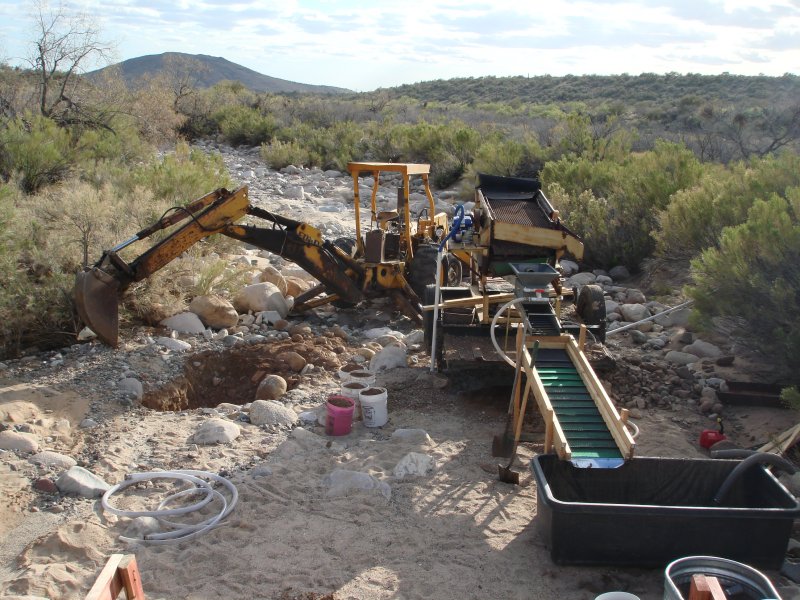
The gold miner must know what tools he/she will need to extract the gold from the soil in which it is embedded. Gold found in the desert often lays where dried rivers flowed. Sometimes nuggets lay on the surface and prove easy to find. The would-be miner might use a metal detector, a shovel, picks, straining materials, and digging trowels. Deeper gold may require an excavator and bulldozers. Different sluicing methods are available depending on the soil conditions as well. Likewise, the miner for the gold of the Gospels needs to acquire proper tools.
MINING TOOLS
NOTE:
The reader will do well to review each before purchasing one or more of the suggestions. These will often cover the entire New Testament rather than just the Gospels, but the gospel section is worth the price of the books for the background information. If you click on the highlighted links, you will be taken to the Amazon page for the reference and you can read the printed reviews as well as contributors when appropriate. Some may be found in ebook format as well as kindle.
HARMONY OF THE GOSPELS and A LIFE of CHRIST
(click on the titles and you will be taken to an Amazon description of the works included below):
Without question, this area generates much discussion and debate. The suggestions below are just that – suggestions. There are numerous essays and articles that one can search out as well. The list is alphabetical and not necessarily any specific ranking.
NOTE:
The reader will do well to review each before purchasing one or more of the suggestions. These will often cover the entire New Testament rather than just the Gospels, but the gospel section is worth the price of the books for the background information. If you click on the highlighted links, you will be taken to the Amazon page for the reference and you can read the printed reviews as well as contributors when appropriate. Some may be found in ebook format as well as kindle.
When surveying for gold, the location must be selected. The soil must be tested as to whether to dig or not to dig. This is where a metal detector may come in handy. Likewise, this is the place where the Harmony and the Life of Christ comes into use.
The gold miner will explore the surrounding literary context(s) of the passage. Click here to review this step.
2. UNCOVER THE BACKGROUND MATERIAL TO EXPLORE FOR GOLD
The gold miner will remove all the rocks and boulders that may block his exploration for gold under such obstacles. The miner then grids out his claim to carefully survey the surface materials.
The miner will start with each individual square of his grid to systematically explore the entire site for his previous gold. Having already checked out the literary context, the Gospel miner must know how the passage understudy relates logically, chronologically, historically and theologically. Other tools can be suggested such as Bible Atlas, Bible Dictionaries, Bible Encyclopedias, New Testament Histories, New Testament Theologies and Dictionary of Theologies.
Below are suggested grids to survey:
The Historical grid – Summarize the ‘big’ picture. What is happening world-wide that might touch the passage under study?
The Cultural grid – what is happening in the culture during this passage? Are specific Jewish cultural aspects mentioned? Are there Gentile cultural aspects mentioned? Are there other aspects of culture touched upon?
The Religious grid – who is to be worshiped/ Why are they to be worshiped? In what manner is the person/god to be worshiped?
The Economic grid – what is the economic climate like in the passage? Who are contrasted or compared, if any? Are there rich and poor? Are there entitled over the weaker?
The Social grid – what is going on socially? How are people related to each other in work, housing, religion, etc.?
Maybe you can add other grids you check? Help me build a list of grids and what each grid should include. Include your suggestions in the comments box.






 Truth-Travelers