

Set against the bleak backdrop of the Great Depression, Napoleon Hill penned his magnus opus, Think and Grow Rich in 1938. Contained in the pages of this timely book which gave people hope that life could get better, Hill records the story of R. U. Darby and his uncle.
U. Darby’s uncle caught gold fever and traveled west, staked a claim, purchased a pick and shovel, and began to dig with feverish abandon. His lust for gold caused Darby’s uncle to push through the hard days.
Week’s passed before this uncle unearthed the shiny metal. He figured that heavy machinery could expedite his recovery of this vein or riches. He covered up the mine, crossed the country back to his home in Williamsburg, Maryland, and convinced many friends and family to invest in the mine. The machinery was purchased and shipped to the mine. Darby and his uncle returned to the mine.
They extracted a car of gold and shipped it to a smelter. Darby’s uncle owned one of the richest mines in Colorado. The debt for the machinery could be paid with a few cars of this gold. Then the gold would be filling in their pockets.
The men drilled as their hopes arose. Then, something happened – the vein of gold vanished. The rainbow dried up and the pot of gold was missing. The two men kept drilling, but they soon gave up. They quit!
To help recoup some of their expenses, the men sold their machinery to a junk man for a few hundred dollars. They purchased train tickets and left for home. Now, some junk men fail to seize the opportunities presented to them. But, not this junk man. He sought the services of a mining engineer who figured what had happened to the gold vein. He told the junk man that Darby and his uncle had failed because they did not understand how the ‘fault lines’ ran. He finished some calculations and told the junk man, that the gold vein was just three feet from where Darby and his uncle stopped. Can you imagine that? Three feet from millions of dollars. The junk man was wise in that he sought help to mine the gold ore from the earth before giving up.

http://www.sacred-texts.com/nth/tgr/tgr06.htm
Biblical Narratives represent a gold mine of almost immeasurable riches.
Almost half of the Old Testament (40 %) consists of narratives. Have you discovered the narratives in Genesis, Exodus, Numbers, Joshua, Judges, Ruth, 1 – 2 Samuel, 1-2 Kings, 1-2 Chronicles, Ezra, Nehemiah, Daniel, Jonah, and Haggai are mostly narrative? Even Job, Isaiah, Jeremiah, and Ezekiel have substantial amounts of narrative scattered throughout them.
Since biblical narratives are stories, they go beyond merely documenting events that happened in history. Narratives include how things happened and this invites the reader to experience, along with the main characters, the action being described. The biblical authors intend his readers (you and me) to identify with the characters and to experience what they are experiencing.
Norman Perrin, in The New Testament: An Introduction (New York: Harcourt Bruce Jovanovich, 1974), 165 writes, “The natural function of narrative is to help the reader hear the voices, take part in the action, get involved in the plot.” Naturally, the more realistic the characters, the more accurate the settings and the more believable the plot, the more compelling the reader is to join the characters in the story.
Let’s define the gold we want to unearth: Narrative or story is a literary from possessing sequential time action and involving setting, characters, and plot. It is the story form of literature.”
Quarry for the Setting –

Settings serve as the stage upon which the stories unfold. Settings serve as a backdrop to the plot and aid the reader in understanding the action taking place. For example, knowing Abraham was a nomad provides the reader with knowledge about his lifestyle. Settings include the physical aspects of geography, culture, and nearness or distance from society.
Excavate for Characters –

Characters paint important pictures. Picture these scenes among others: Abraham with his hand raised high, holding a sharp knife, poised to pierce Isaac’s heart? The disheartened reaction of Josephs’ older, wicked brothers’ hearts when Joseph demanded they leave their youngest brother in his care while they returned to their father with Benjamin. The eyes of the people of Israel when they watched the armies of Pharaoh drown in the Red Sea. The surprise of both the Philistines and the Israelites when youthful David slung the rock into the forehead of Goliath and Goliath fell to the ground like a mighty oak.
Characters fill almost every page of the Old Testament. Consider Haman, the Agagite exterminator, Jezebel, King Ahab’s murderous wife and vineyard stealer, Jonathan, King Saul’s son whose heart was knit to David’s. Reflect upon scheming Rebecca who helped her son, Jacob, steal the birthright from his brother. Who could forget Jacob being outwitted by his father-in-law on his wedding night? Many more intriguing stories await discovery in the Old Testament.
Dig for the Plot –
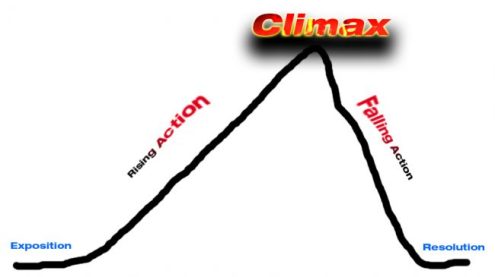
Plot contains the arrangement of events within the story. Normally plot is a sequential arrangement of events interrelated. Plots build on a beginning, a middle and a conclusion. Plots rely on conflict to move the story line forward so that a resolution can be found. Conflict can utilize physical boundaries, such as seeking to survive wandering in the wilderness for forty years. Other plots explore the conflict between characters: Cain and Abel for instance. A third plot explores moral of spiritual conflict such as Jezebel’s desire for Naboth’s vineyard.
Six Suggestions for unearthing the gold from Biblical Narratives*

- Read the biblical narrative with the intention of joining the main characters in their journey. Narrative stories are invitations to experience what the characters are experiencing. Use your imagination to make the experience vivid and concrete.
- Read the biblical narrative examining every detail of the setting. These details are not normally superfluous. They are hints the author has included to help us understand the plot of the story. Ask yourself how these setting details aids your understanding.
- Read the biblical narrative digging to know every detail about the characters. No detail is irrelevant.
- Read the biblical narrative paying attention to the development of the plot, especially the conflicts. How are the conflicts explored and resolved? Watch for multiple plots within the story. Keep an eye for cause-effect events.
- Read the biblical narrative asking how the narrative gets your attention, arouses your curiosity, or creates suspense?
- Read the biblical narrative seeking to develop the antagonist and protagonist in the story. What characteristics do you notice of each?
Helpful Resources:

Fee, Gordon and D. Stuart. How to Read the Bible for All its worth, 2nd ed. Thorndike, ME: G. K. Hall, 1993).
Gabel, C. B. Wheeler and A. B. Your, The Bible as Literature: An Introduction, 4th ed. New York/Oxford: Oxford University Press, 2000.
Goldingay, J. Models for Interpreting Scripture. Grand Rapids: Eerdmans, 1995.
Licht, Jacob. Storytelling in the Bible. Jerusalem: Magnes, 1978.
Ryken, Leland. How to Read the Bible as Literature. Grand Rapids: Academie
Books/Zondervan Publishing House, 1984.
Tannehill, Robert C. “The Disciples in Mark: the Function of a Narrative Roll.” Journal of Religion 57 (1977): 386-4-5.
Wilder, Amos N. “Story and Story-World.” Interpretation 37 (193): 353-364.
What biblical narratives do you find most enjoyable to read? Why? Let;s discuss how we can experience what the biblical characters experienced.
 When we approach God’s Word, we must know how to discover God’s original intention and what it means, not merely what it means to you.
 This implies that the interpreter possesses a vital relationship with the God of the Bible. Does it make sense that if one denies the existence of God, the Bible cannot have meaning for such a person? How or why would someone as such want to read or study the Bible? Hebrews 11:6 indicates that it takes faith to please God since you must believe God exists and that He rewards those who seek Him.” Please understand that I am not saying that the unbeliever cannot grasp some of the facts and truths of the Bible – but such a person can never embrace the Bible as God’s full revelation of Himself. Nor do I believe that every sincere believer will always produce a ‘correct’ interpretation. But it is the role of the Holy Spirit to guide the believer into truth. Let’s determine to ask Him. See point 3 below.
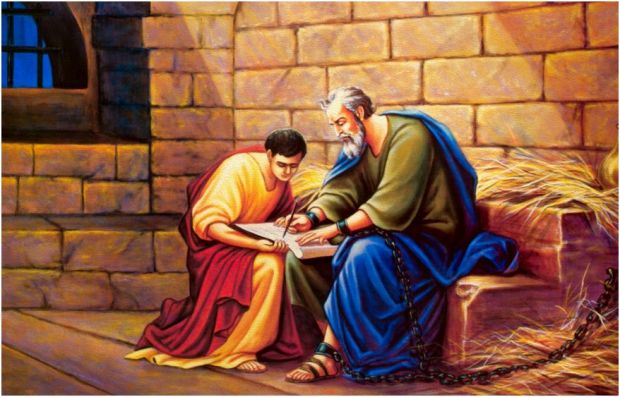


 things about the Assyrian culture that led him to run away from God’s call. What do we know about his audience? What difference does it make to know anything about Ninevah? Where is it located? Why was Jonah’s story recorded? What lessons are we to learn?
 in the wall of ancient Jerusalem through which a camel would squeeze if its load was lifted. The camel had to crawl on its knees through the gate.
 create so much fascination that little focus is kept upon the actual truth. For example, when studying the Parable of the Prodigal Son, one can become enamored with the actions of the Prodigal and his brother, that the role of the father is neglected. We see that He desired relationship with both sons, regardless of the price to be paid.

 century. Americans were expected to learn the four core subjects: reading, writing, arithmetic, and geography.
 traveled to the lands of the Bible. Therefore Bible students are predisposed to imposing their own geographical frameworks upon the biblical story. In addition, some geographical places may have changed due to natural disasters: earth quakes and floods, as well as man-made changes, such as war, agricultural endeavors, and construction projects.
 example, the student may be able to picture himself passing through the Valley of Elah between Succoth and Azekah along with young David. Or maybe the student can understand something of what David felt as he hid in the caves of Ein Gedi as King Saul was seeking to kill him. Maybe the student can imagine what it would be like to accompany Elijah when he escapes from Jezebel after killing the prophets of Baal? Perhaps the student can envision walking on the water with Peter or being associated with Paul as he makes his second missionary journey into Europe? The student should have some idea about the Via Ignatia as Paul travels through Philippi and Thessalonica. Who would want to miss out on this journey?
 armies, like Israel’s army not engage the enemy for forty days even though the nine foot giant, Goliath, taunts them? God designed every hill, valley, river and mountain in Israel. God selected the actors and wrote the script. So, does the geographical stage make any difference? Why do Gentiles settle in certain areas of the land of Israel and not in other areas? Why does the Hellenistic culture penetrate the high population areas and not the sparely populated regions of the western mountains?
 biblical student to picture the sudden storms which come upon this Sea. The student will know that the waves of the Sea of Galilee rage and dash upon the objects in its way. The student’s knowledge of the patterns of climatic features which cause the phenomena will stand a better chance of correctly dividing the Word of God. The geographical backgrounds allow the student to participate in the action or events that are recorded in the biblical text. The geographical context is often neglected in biblical interpretation and exegesis.
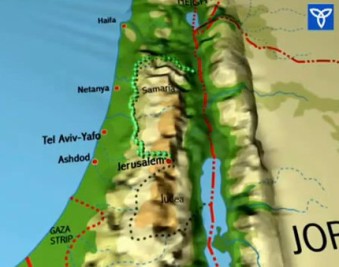 enemies and other times they were places of joint worship. Certain times kings would unite from one geographical section to fight against another group from the other side of the desert or the seas. This allows the student to be able to see how one group of people related to another or how one biblical person interacted with others: brothers, father and children, husbands and wives, kings with subjects and the list can go on. The land often caused some people to be friends with other peoples and enemies with still another group.
 Bible presents a message linked to geography.”
 The Roman historian, Tacitus, depicted Felix’s leadership as cruel and full of lust. In another place, Tacitus claimed Felix stirred Jewish unrest by acts of “injudicious judiciary measures.”


 Truth-Travelers